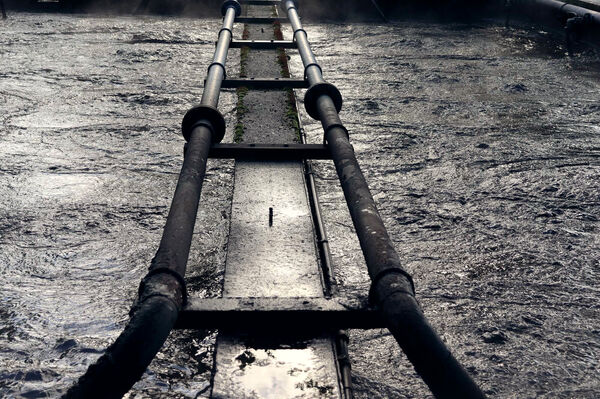
Treated wastewater and alternative sources can replace a surprisingly large share of your fresh water, often with a payback period that will please your CFO too.
Water is becoming more expensive and less certain
The bill for mains water is only part of the real cost of water. Add up supply, the sewerage contribution, your own pre-treatment and discharge, and in Flanders you quickly reach 4 to 6 euros per m³. And the discharge side is rising: the Flemish sewerage tariff per pollution unit went up by 41% in 2026.
On top of that comes the question of whether there will still be enough water tomorrow. Dry summers, restrictions on groundwater and drinking water companies that weigh up large new connections first make water a factor in every growth decision.
Your own wastewater as a water source
In the studies we have carried out in recent years, treated wastewater could often replace 15 to 45% of water consumption. At Agristo in Wielsbeke, up to 40% of site consumption proved replaceable by the site's own treated effluent, almost 479,000 m³ per year. At Aluminium Duffel, the site's own wastewater, treated again in the existing reverse osmosis, can replace 27% of consumption, with a payback period of about 2.7 years.
More than a saving
- Security of supply: if you recover part of your water yourself, you depend less on groundwater, canal water or the mains network.
- Room to grow: at Algist Bruggeman, the permitted water flow can fall step by step from 870,000 to 350,000 m³ per year.
- Lower discharge costs: less discharge means lower levies and less pressure on your permit.
- Customers and investors increasingly ask about the water footprint of your product.
What should you look out for?
Reuse is always tailored to the site. Three questions keep coming back. What quality does each application need? What happens to the concentrate and to your discharge permit? And how stable is your wastewater? At Agristo, a quality simulation showed that ultrafiltration alone would exceed the chloride limit, while a combination with reverse osmosis would not. You would rather see a risk like that on paper than after construction.
Where do you start?
With a water balance that adds up. Only when you know where your water goes can you see which flows you can reduce, which you can reuse and which investment pays off first. Want to know what reuse could mean for your site? Ask us your question.

More insights
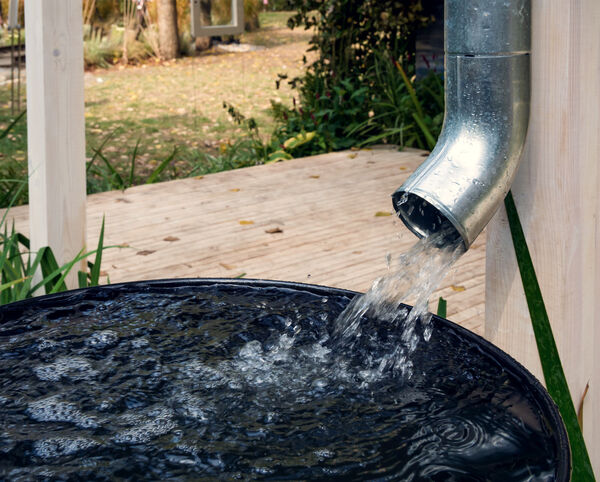
Rainwater is an asset, not a nuisance
With the right plan, the rainwater from your roofs covers a good share of your water demand, and sometimes even all of it.
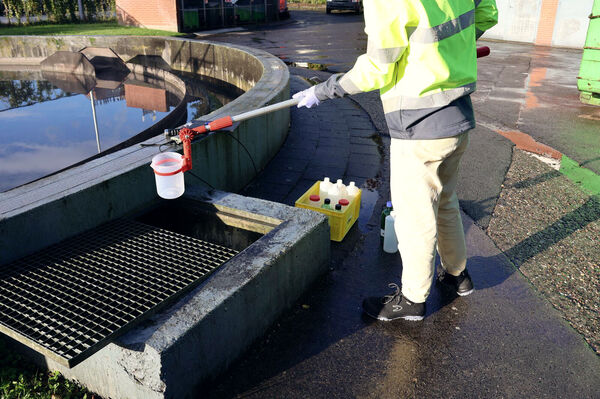
Getting ahead of BBT+ and stricter discharge limits
Discharge limits only move in one direction. Companies that treat compliance as an early design problem avoid the scramble later.
More water insights?
Follow the projects we work on, or ask us your water question.