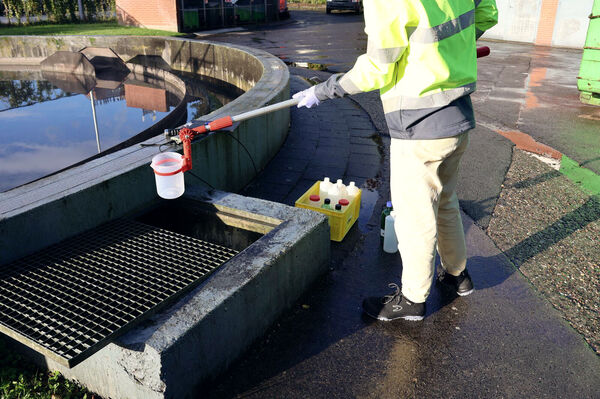
Discharge limits only move in one direction. Companies that treat the compliance question as a design question avoid rushed work later.
Every permit renewal raises the bar
Discharge conditions follow the best available techniques (BBT). These keep moving, and with every permit renewal the authorities can impose stricter limits or new parameters. At ViskoTeepak in Lommel, the permit renewal brought stricter limits for sulphates, while sulphide levels were already close to exceeding the discharge limit. If you only start looking at that point, you have little time and little choice.
Start at the source, not at the treatment
The most expensive solution is often an extra treatment step on a flow you would be better off tackling at the source. At Aertssen Logistics, an emulsifying soap turned out to be the cause of excessive COD, oil and detergents in the wash water. A different soap brought immediate improvement, before any treatment was built. A good characterisation of your wastewater flows is therefore always the first step.
Reuse changes your discharge
If you reuse water, you discharge less, but in a more concentrated form. You need to substantiate that as well. At Algist Bruggeman, an impact analysis showed that the concentrate from the reuse installation affects canal water quality by less than 1% per parameter. That made reuse permittable.
Back up your application with data
A permit application is stronger with measurements, a worst-case approach and scenarios that show which measures you will take and when. That way you negotiate on the basis of facts, not assumptions.
Four questions for your next permit renewal
- Which parameters are close to the limit today, including at peaks?
- Which new BBT requirements or parameters are coming for your sector?
- Do you know which flow carries the largest pollution load?
- What changes in your discharge if you start reusing water?
More insights
When does industrial water reuse pay off?
Treated wastewater and alternative sources can replace a surprising share of fresh-water intake, often with a payback that makes the CFO smile.
Rainwater is an asset, not a nuisance
With the right plan, the rainwater from your roofs covers a good share of your water demand, and sometimes even all of it.
More water insights?
Follow the projects we work on, or ask us your water question.